Axial flux actuator
A disc magnet and a simple thrust ball bearing for simple and cost-effective industrialization.
A direct drive actuator is an actuator that is directly connected to its load without any motion transformation (e.g. gears). This operating mode guarantees fast movements and direct controllability and lifetime.
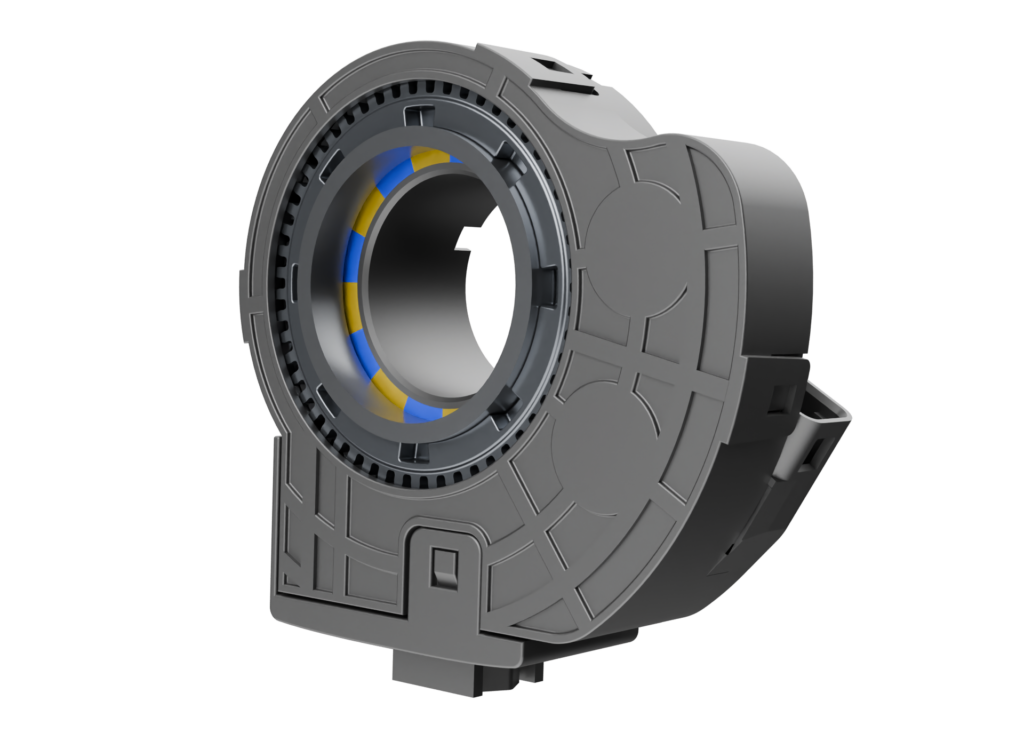
The direct-drive actuators designed by MMT are single-phased, use magnets which allows them to be controlled bi-directionally over a rotative or linear stroke (up to 180° or 150 mm respectively) and allow an easy integration of a position sensor.
Our actuators technologies deliver two behaviours:
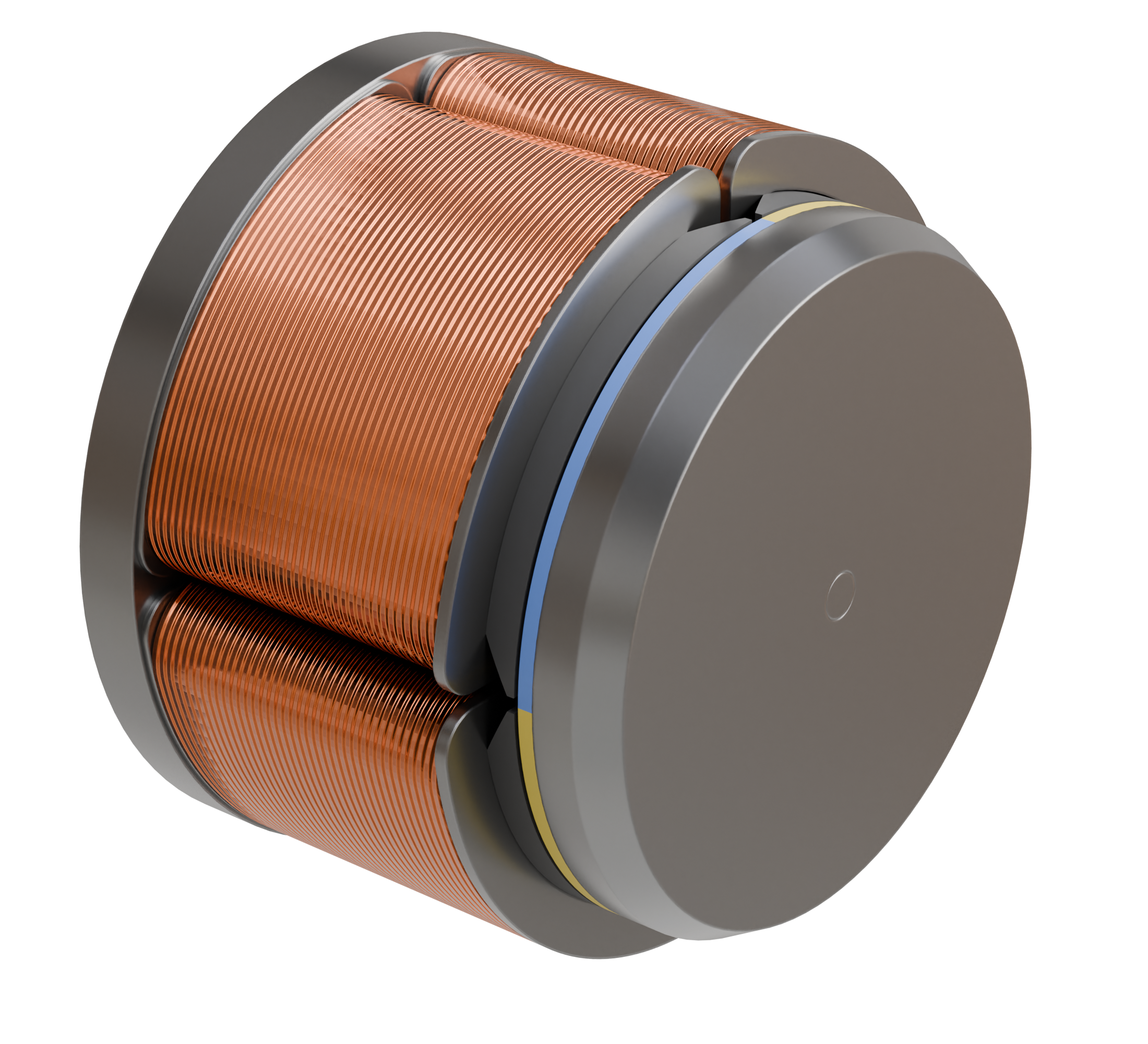
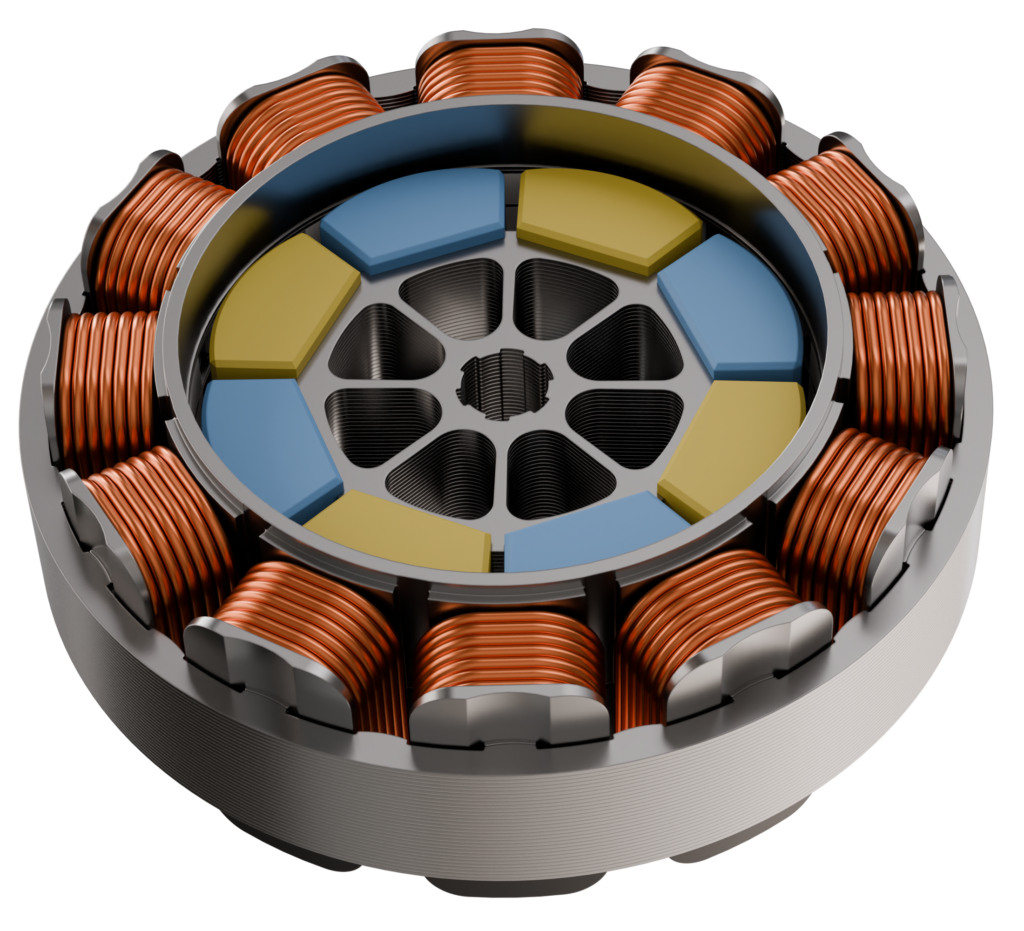
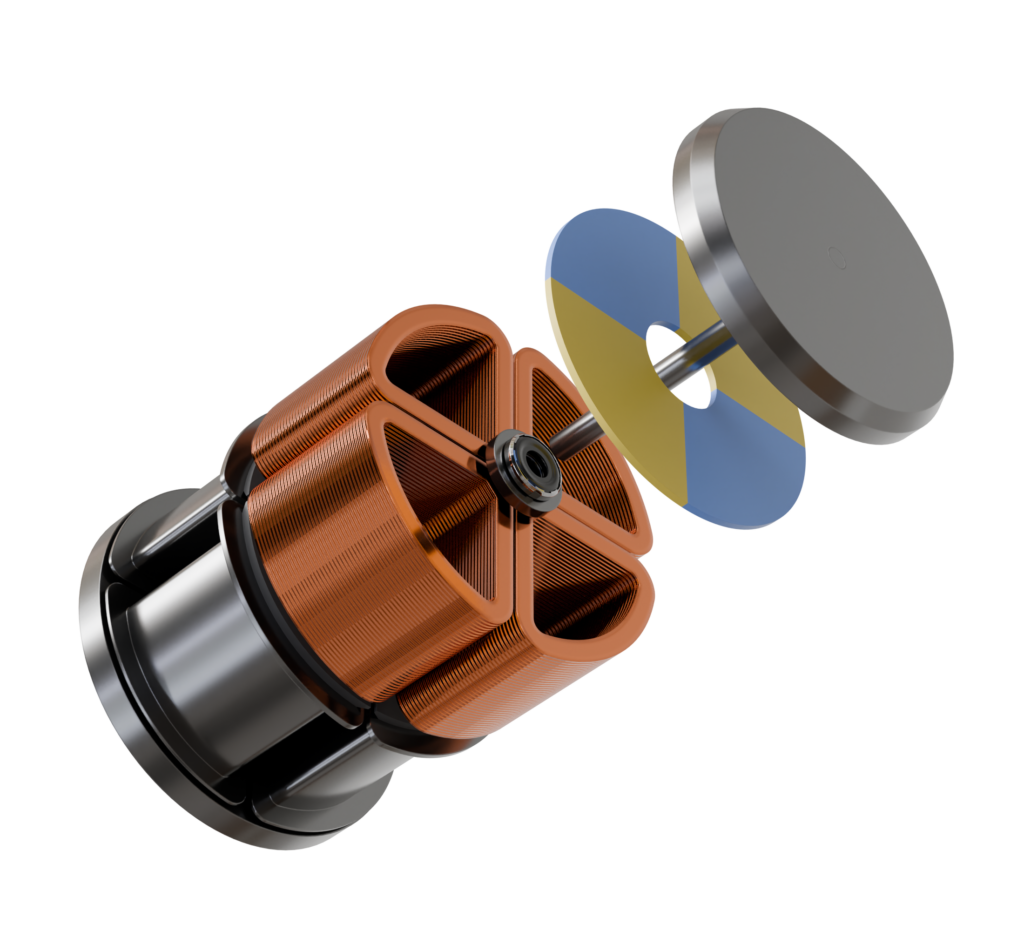
This technology describes an axial flux, single-phased actuator. It has a disc magnet with 4 poles, and a stator with 4 coils, delivering a maximum stroke is 90°.
This actuator is fully scalable to our customers specifications with a very large torque level range.
A disc magnet and a simple thrust ball bearing for simple and cost-effective industrialization.
The electromagnetic interaction between the current and the magnet guarantees a torque proportional to the current.
The smart rotor topology, the simple mechanical construction and the high filling factor of the coils lead to a robust actuator with an unrivalled torque density.
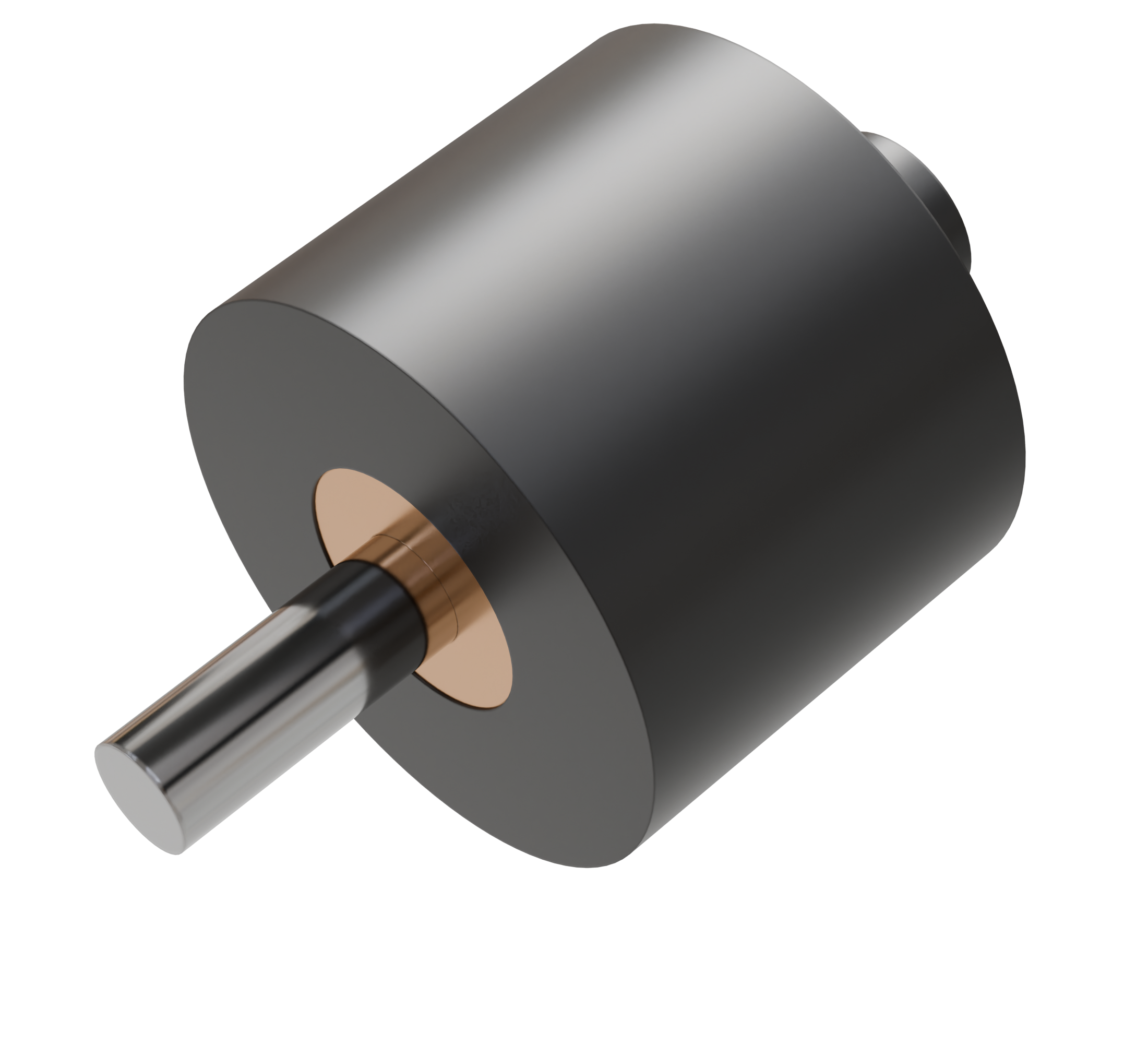
This technology describes a polarized bistable linear actuator. Its advantages are its simplicity of construction, compactness and the high level of holding force without current at both ends of stroke.
Because it is a bistable actuator and the movements are made in a few milliseconds, this technology allows significant energy savings compared to a solenoid actuator.
This actuator is fully scalable to our customers specifications.
High holding force at both end positions without energy consumption. Low torque.
This actuator only uses energy to change its position.
The only moving part is a soft ferromagnetic component, therefore the magnets are not subjected to shocks during operation.
It is possible to seal the stationary parts to avoid contact with a potential fluid managed by the system.
This actuator is driven by a pulsed bidirectional power supply: