Discover the HMI
Adaptive Physical HMI for Multi-Function Interfaces
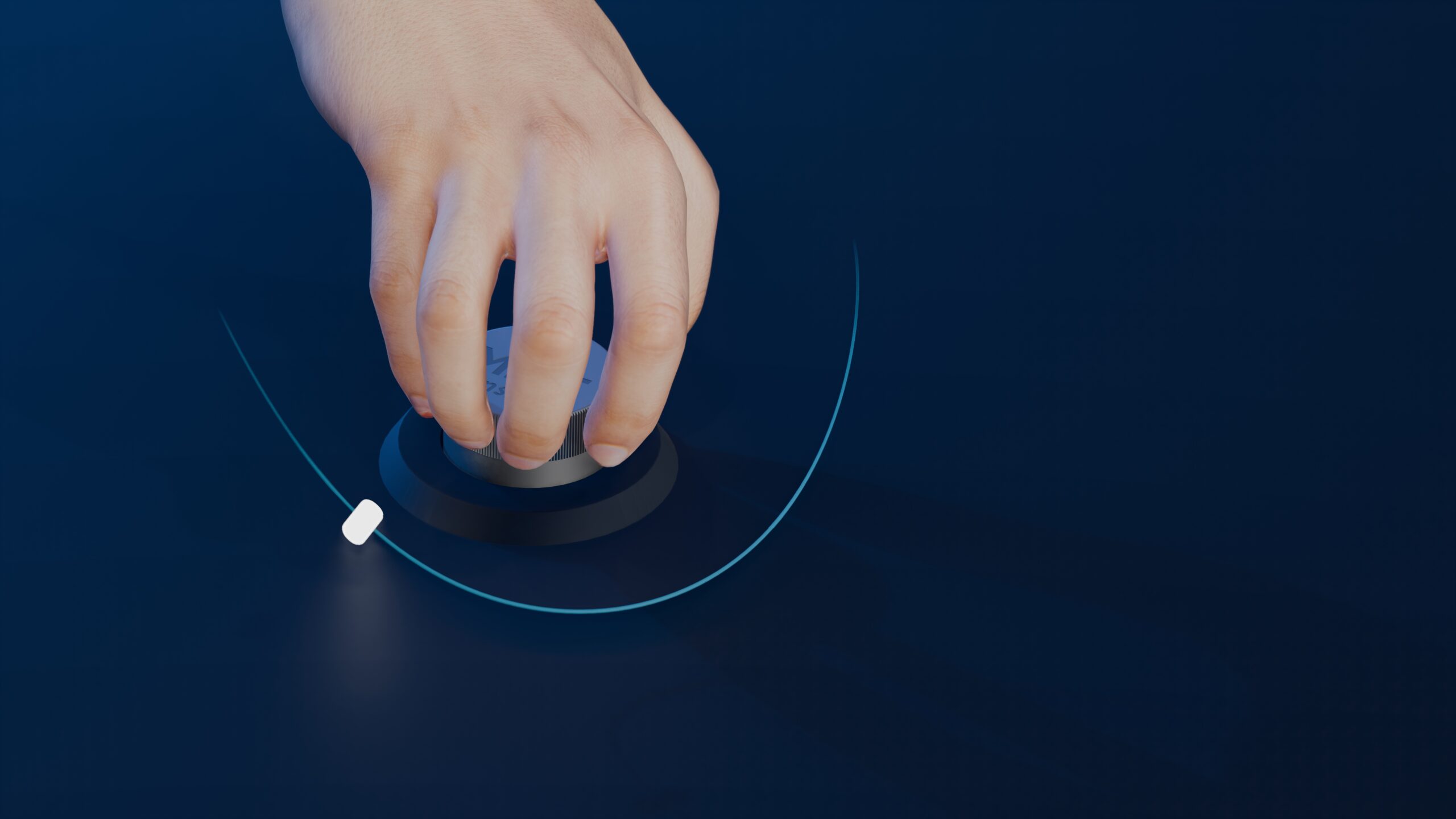
Rotary knobs, dials, and joysticks provide tactile feedback that improves safety and perception compared to touchscreens. As interfaces offer more functionalities, adding extra physical buttons is not always possible. Instead, variability in haptic response becomes essential to contextualize controls dynamically. MMT’s HMI technologies, based on magnetic interactions, enable this adaptability—allowing a single control to change its feeling according to the active function, ensuring intuitive (It makes seamless design possible) and secure operation without increasing hardware complexity.



Both passive or variable active MMT’s HMI technologies leverage magnetic interactions to deliver unmatched reliability and precision. With no mechanical wear, silent operation, and intrinsic position sensing, these systems ensure consistent torque and exceptional repeatability. Their ultra-low friction guarantees smooth motion and high-quality positioning, setting a new standard for durability and user experience.
MMT’s haptic solutions go far beyond simple magnets. Their engineered magnetic circuits are designed to deliver high torque, a large number of detents, or even customized torque profiles that provide precise tactile feedback. This allows users to feel fine positional accuracy and nuanced control, ensuring an intuitive and high-quality interaction experience.
Our optimized design reduces the Bill of Materials and overall weight, enabling more cost-efficient manufacturing and easier integration.
Above all, these magnetic-based HMI systems enable precise detection of the control element’s position. MMT integrates its most advanced continuous position sensing technologies, ensuring smooth and accurate feedback. These sensors are designed to be highly resistant to electromagnetic disturbances, whether from nearby buttons or external sources, guaranteeing reliability and stability in demanding environments.
MMT’s HMI solutions range from passive haptic systems active interfaces, where precise torque control enables fine sensations such as viscosity, detents, and spring effects. Between these extremes, modular technologies allow dynamic customization: adjusting the number of detents, programming hard stops, or even locking the control element at any position based on interface context. This flexibility ensures intuitive, adaptive interaction without adding complexity. All of this is achieved with a strong focus on optimizing energy consumption and overall device cost, ensuring high performance without compromising efficiency or affordability.