
ac37ebd56d9c9a4994bbf8fb9aa189dd4b717d8e

Fluidtronic &  mechatronic technologies

Since day one, our goal has been to support you bring innovative products to the market.  We spot trends and signals that will cause major positive impact in the future. We help you move faster by providing the targeted results of years of research, analysis and technology development.

FLUIDTRONIC TECHNOLOGIES

A fluidtronic device receives electronic command signals and converts them into the controlled movement of a fluid—air or liquid.
 Its output is pressure and flow, enabling functions such as cooling, air circulation, thermal management, or fluid transfer.

At MMT, we master all the essential pillars of fluidtronics:

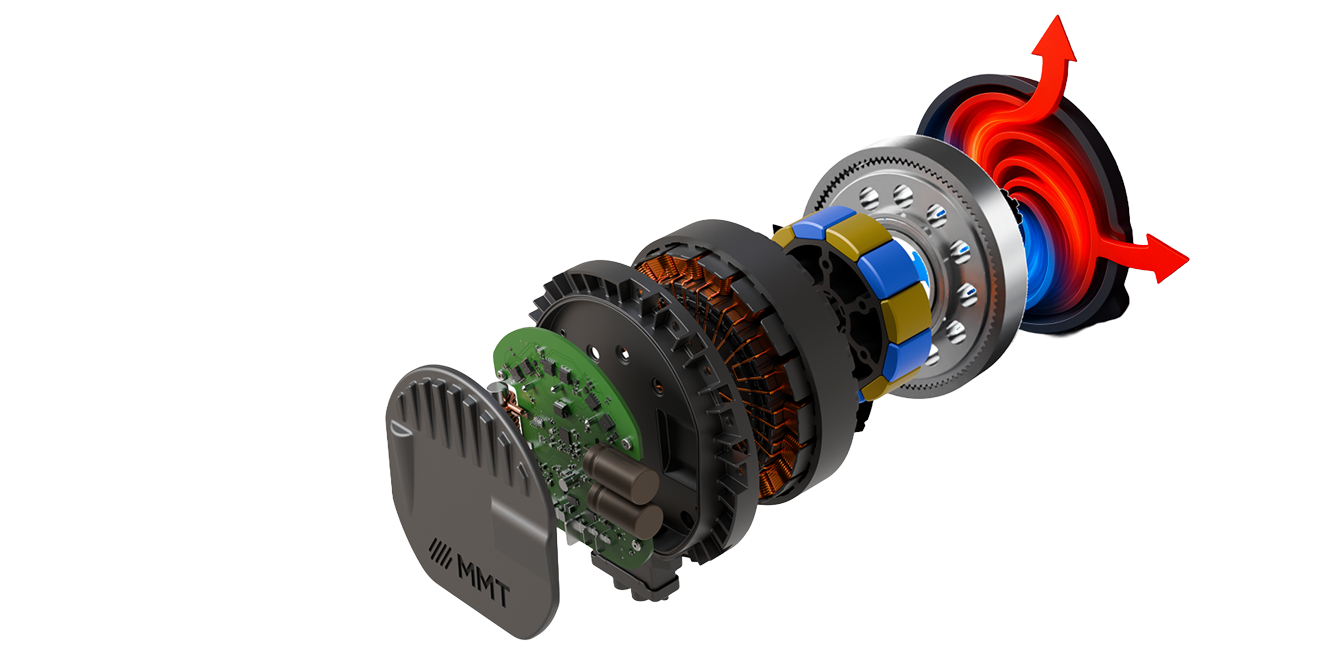
  • Electromagnetics – powering highly efficient electric motors and actuators that drive fluidic components with precision.
  • Electronics & Control – ensuring optimal regulation of pumps, fans, compressors, or valves through advanced embedded control systems.
  • Position Sensing – providing accurate real‑time feedback to enable stable and dynamic fluid regulation.
  • Mechanical Engineering – designing robust and compact architectures that house and support all fluidic and electromechanical subsystems.
  • Innovative Fluidic Design – developing the core fluid‑handling elements such as pumps, fans, compressors, and valves, optimized for pressure generation, flow performance, efficiency, and acoustics.
     

By mastering both the electromechanical and the fluidic building blocks, MMT creates fully integrated fluidtronic systems that are more compact, more efficient, quieter, and better optimized than traditional assemblies.

MECHATRONIC TECHNOLOGIES

A mechatronic device receives electronic command signals and converts them into a mechanical motion—either linear, rotational, or both—resulting in the generation of force and torque.

At MMT, we excel in each of these core mechatronic pillars:

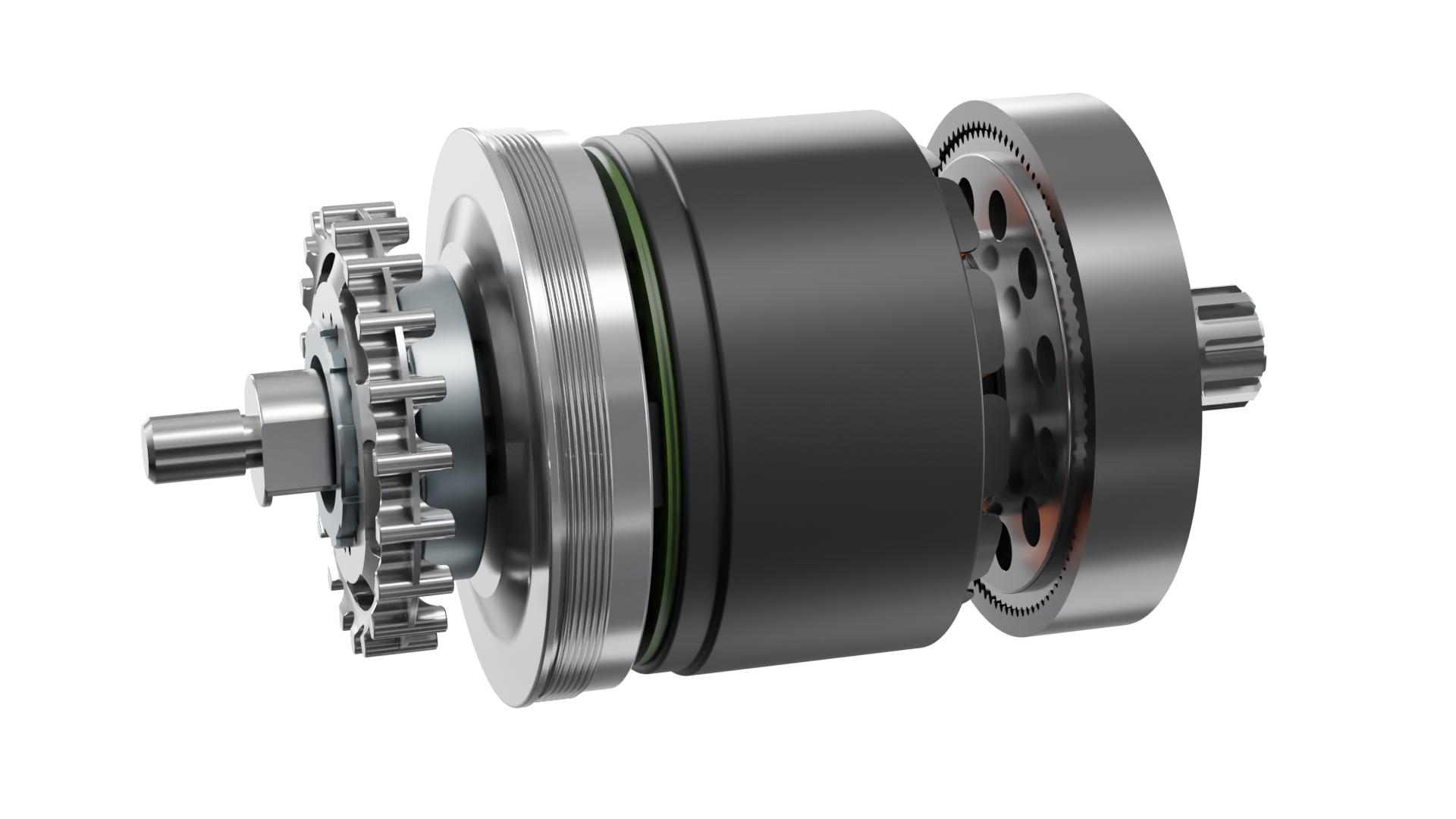
  • Electromagnetics – the foundation for designing high‑performance BLDC electric motors and direct‑drive actuators, enabling precise, efficient motion generation.
  • Electronics SW & HW – the design of embedded control electronics that drive motors and actuators using command signals and sensor feedback to ensure optimal performance.
  • Torque and Position Sensing – the development of advanced magnetic position sensors that provide accurate feedback for motion control.
  • Mechanical Engineering – the creation of innovative and compact gear reducer designs that deliver high torque density or force and reliability.
     

By mastering these complementary technologies, MMT delivers robust, efficient, and integrated mechatronic solutions tailored to demanding applications across multiple industries.

YOUR QUESTIONS, OUR EXPERTISE

Frequently asked questions

What does MMT’s mechatronic expertise cover?

MMT develops BLDC motors, direct-drive actuators, torque and position sensing, embedded electronics and compact mechanical transmissions. These capabilities support controlled linear or rotary motion and can be combined in integrated systems for demanding industrial and mobility applications.

Why design the electric motor and fluidic components together?

Designing the motor and fluidic components together helps match electromagnetic performance, fluid behaviour and operating conditions. MMT uses this integrated approach to address system efficiency, packaging, acoustics and control, rather than optimizing each component independently.

Which products can use MMT’s fluidtronic technologies?

MMT’s fluidtronic expertise applies to electric pumps, fans, blowers, compressors and valves. These technologies support functions such as cooling, thermal management, air circulation and fluid transfer, with architectures adapted to the pressure, flow and integration requirements of each application.

Which engineering disciplines are involved in a fluidtronic system?

Fluidtronic engineering involves electromagnetic motor and actuator design, embedded electronics, control software, position sensing, mechanical engineering and fluidic design. MMT develops these building blocks together so that the drive, fluid-handling components and control strategy operate as a coordinated system.

What is the difference between mechatronics and fluidtronics?

Mechatronics combines mechanics, electromagnetics, electronics and control to generate and regulate motion. Fluidtronics extends this approach to liquids and gases. MMT brings these disciplines together to design integrated systems whose outputs include mechanical force, torque, fluid pressure or flow.